



.svg)


.svg)
.svg)
.svg)
.svg)
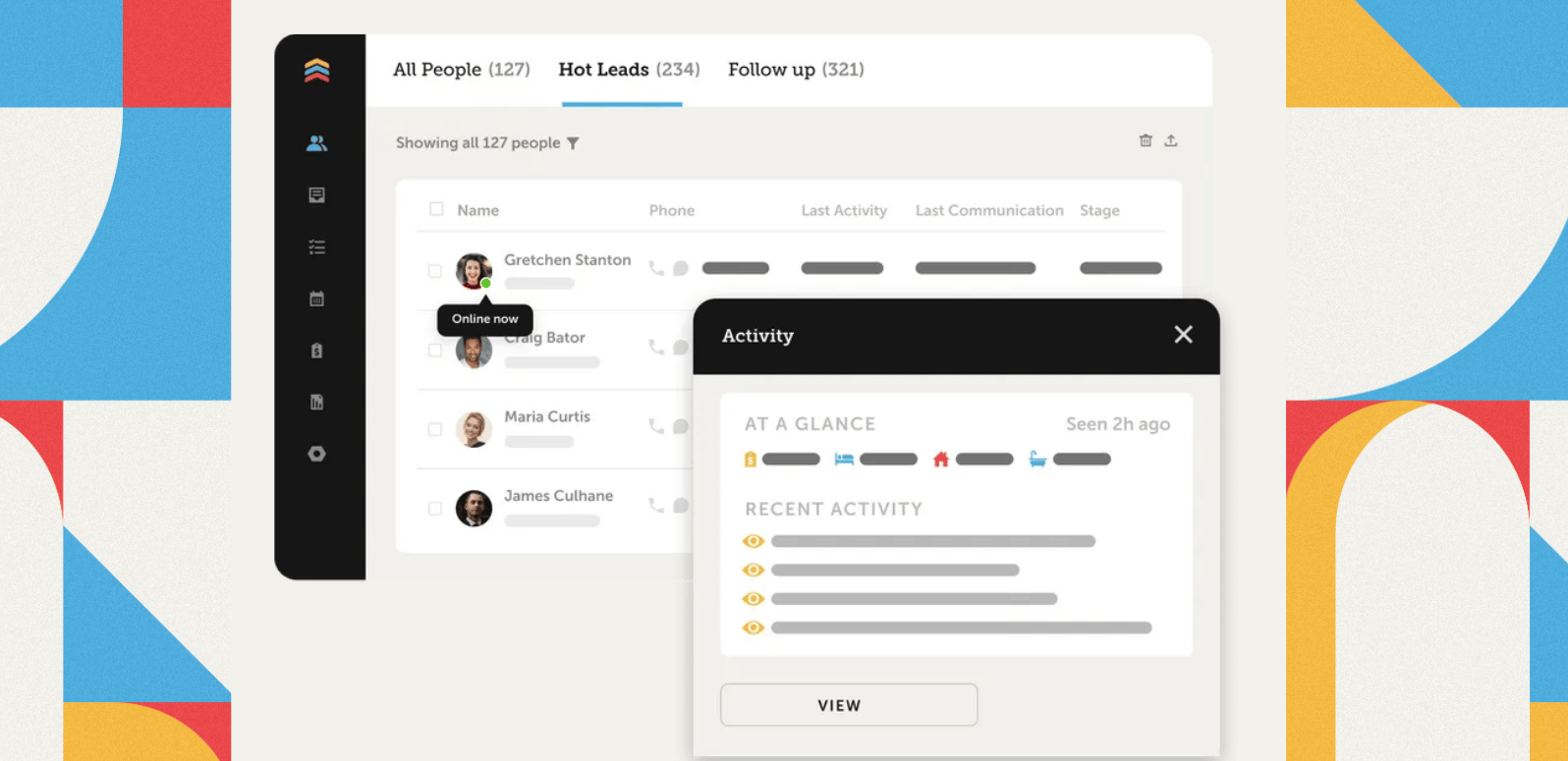

If there's one constant in real estate, it's change. As a broker or team owner, you need data-backed insights to lead from the front.
One tool that's often overlooked? Your CRM data.
Here's how leading teams are using their CRM analytics to predict market shifts and make the right decisions at the right time.
4 ways to stop guessing and start leading
You don’t need expensive tools or complex market research to keep up with a changing real estate market.
You already have a goldmine of data in your CRM. Here’s a look at how top-performing teams are putting those insights to work. 💪🏼
1. Use your database to spot market shifts
Your CRM isn't just telling you about individual leads—it's showing you where the market is heading. Here's what to look for:
- Changes in buyer timeline patterns
- Shifts in price point searches
- Emerging neighborhood trends
Renee Funk of The Funk Collection has noticed a tangible shift in buyer timeline. For Renee last year, almost no client is in the warm 3-6 month stage.
The operative question for Renee: What are we doing with that information?
At The Funk Collection, it’s all about training agents to get back in touch with their sense of curiosity.
“We are leaning in to find out if they are a nurture or hot. That is a skill set agents are going back to rediscover. How do you go into curiosity with the people in your database and find out how specific that timeline is?” says Renee.
{{cta-blue}}
2. Track changing engagement patterns
You know what’s more important than lead source? Understanding what actually happens with a lead after they enter your real estate funnel.
Here are the key areas to look into:
- Lead behavior across different sources
- Targeted follow-up sequences for each lead type
- Response rates by demographic and neighborhood segments
Top-performing teams are creating distinct paths for different types of leads—from cash buyers to area-specific to investors.
“The follow-up for those customers is what took us to the next level once we had those steps defined,” says Ben Laube of Ben Laube Homes.
Ben’s team targets their ads based on geography and buyer characteristics, then maps the path to a fully-trained sales agent experienced with those specific likes and interests.
3. Match leads to agent specialties
The old "next up" approach to lead distribution doesn't cut it anymore. Successful teams match leads to agents based on expertise and conversion rate.
Here's how modern teams are going beyond round-robin:
- Match leads to agent specialties
- Consider agent workload and capacity
- Allow agents to "pause" when at capacity
At Wemert Group Realty, Jenny Wemert and her team serve 130 zip codes. With 50% of their business coming from repeat/referral, plus SEO and other sources, it’s a lot to juggle.
Which is why there’s no harm done anytime an agent needs to hit pause: “Just turn yourself off and turn yourself back on when you’re ready to take new buyers.”
The team’s real estate VA helps with portal updates, while leaders coach agents that it’s ok to pass on a lead if it’s not in their wheelhouse.
“If they feel like 'I'm not a specialist in that area, they can take the time to build a relationship with a client, convert them, and then hand them to another agent on the team for a 10% referral fee,” she explains.
It’s an approach that keeps everyone happy, first and foremost: the customer.
{{cta-white}}
4. Use data to drive recruiting
Your CRM data doesn't just help you spot market trends—it helps you attract and retain high-performing agents.
Smart real estate teams are:
- Using CRM data to tell agent success stories
- Demonstrating systematic support for different work styles
- Backing up claims with concrete performance metrics
- Creating clear success paths
"The best recruiting tool is showing how your current agents succeed," says Ken Pozek of Pozek Group. "When we highlight one team member monthly—showing how a mom of two manages to close five deals per month—that makes our phones ring."
The most effective recruiting doesn't focus on your team's greatness—it shows exactly how your systems and support help agents thrive.
How Follow Up Boss helps you stay ahead
Your CRM isn't just for managing contacts—it's your command center for spotting opportunities and driving results. Here's how top teams use Follow Up Boss to adapt and thrive in any market:
Track what matters most
Get instant visibility into the metrics that drive your business:
- Speed-to-lead and response rates by source
- Appointment set rates and outcomes by agent
- Lead source ROI and conversion tracking
- Deal pipeline and commission forecasting

Build a culture of accountability
Help every agent hit their goals with:
- Beautiful leaderboards that showcase wins
- Automated activity tracking
- AI-powered call recording and coaching
- Team collaboration tools for celebrating victories

Make data-driven decisions
Turn insights into action with:
- Customizable reports for deep-dive analysis
- One-click drill-downs to identify opportunities
- Visual pipeline tracking
- Commission and closing trend monitoring
Keep everyone focused
Stay on top of what matters with:
- Smart lists that surface hot opportunities
- Automated follow-up sequences
- Mobile access to contacts and insights
- Team messaging and @mentions

Leverage AI insights
Harness the power of AI to uncover hidden opportunities and trends:
- Smart recommendations for personalizing outreach
- AI-powered analysis of lead behavior patterns
- Automated alerts for shifts in agent performance trends

Turn your CRM insights into measurable results
Today's market demands more than just basic lead management.
From predicting market shifts to optimizing agent performance, Follow Up Boss gives you the insights and tools you need to thrive in any market conditions.
{{cta-yellow}}


.webp)
.png)

%20(1)%20(1)%20(1).png)