



.svg)


.svg)
.svg)
.svg)
.svg)


Sellers are more informed than ever. They've researched comparable sales, they're interviewing multiple agents, and they're asking harder questions about pricing and commission structure.
The agents who consistently win listings aren't the most charismatic—they're the ones who show up with better data, clearer answers, and stronger conviction.
Because the gap between winning and losing a listing often comes down to a few small moments:
How you respond when a seller challenges your pricing recommendation, how confidently you explain your commission structure, and whether you can reference local market trends without digging through your presentation.
These moments reveal whether you truly know the market and your value as an agent.
This guide draws on insights from successful agents and team leaders to show you how to deliver listing presentations that position you as the obvious choice.
{{cta-yellow}}
Elevating your listing presentation beyond the basics
The problem with most real estate listing presentation advice is that it's either too rigid (show up exactly ten minutes early, always take your shoes off, send the packet on Tuesday at 2pm) or too vague (just be confident, build rapport, show your value).
Neither approach acknowledges what actually happens in the room when you're face-to-face with a seller who's been interviewing multiple agents.
Here's what does matter:
Your ability to demonstrate market mastery through data.
Sellers aren't looking for any agent—they're looking for the listing agent who clearly knows more about their specific market than anyone else. This means showing up with hyper-local insights, not generic market reports.
Your capacity to have honest conversations about pricing.
The agents who win listings aren't the ones who quote the highest price. They're the ones who can confidently walk a seller through the market reality, explain the consequences of overpricing, and earn trust through transparency.
Your confidence in your value proposition.
Whether you're presenting your marketing plan or discussing your commission structure, uncertainty kills deals. You need to believe in what you're offering enough that your conviction comes through in your body language and tone—not just your words.
The goal isn't to follow a script. It's to show up prepared, confident, and focused on solving the seller's problem rather than proving yourself.
Before your listing appointment
Understanding your seller's needs and motivations is critical, especially when the next agent is one click away.
According to the latest Profile of Home Buyers and Sellers, today's sellers prioritize:
- 22% of sellers want an agent's help in marketing the home to potential buyers
- 20% want help to price the home competitively
- 18% want to sell the home within a specific timeframe
Before your appointment, review any CRM notes, social media profiles, or previous conversations.
What are their interests? Do they have a pet? Professional achievements? Taking a few minutes to understand who they are makes you significantly more confident and credible when you walk through the door.
{{cta-blue}}
Know your numbers cold
Modern sellers can smell uncertainty. And in a market where 91% of them are using agents and trust is at a premium, showing up without concrete market data is a dealbreaker.
Rainmakers like Jordana Tobel don’t leave it to chance. She and her agents at Premier Listings have data-driven conversations with sellers every week.
"It's really important as the industry pivots to shift our focus to making sure that we have a strong message to sellers."
The idea is that you're armed with market feedback—hit counts from MLS, showing trends, pricing benchmarks—so when you walk into that listing appointment, you're not guessing. You're presenting evidence.
Before you even schedule the appointment, you should know:
- Average days on market for similar properties in the area
- Recent sale prices and price per square foot
- Current active listings and how they're priced
- Showing activity and buyer engagement metrics
- Seasonal trends affecting the local market
This isn't just about having the numbers.
It's about knowing them well enough to reference them naturally in conversation, respond to objections with data, and build trust through expertise.
➡️ Inside Jordana’s 90-day plan for more listings:
Jordana runs a 90-day accountability program where agents track all their data at the end of each week. The program focuses on specific tasks that yield results: going after expireds, FSBOs, and capturing seller leads.
But here's the key insight: they also started a campaign focused on seller-oriented buyer activity. When someone's searching online and they own a home, they capture that information and hand it to agents who are trained to ask if they have a home to sell.
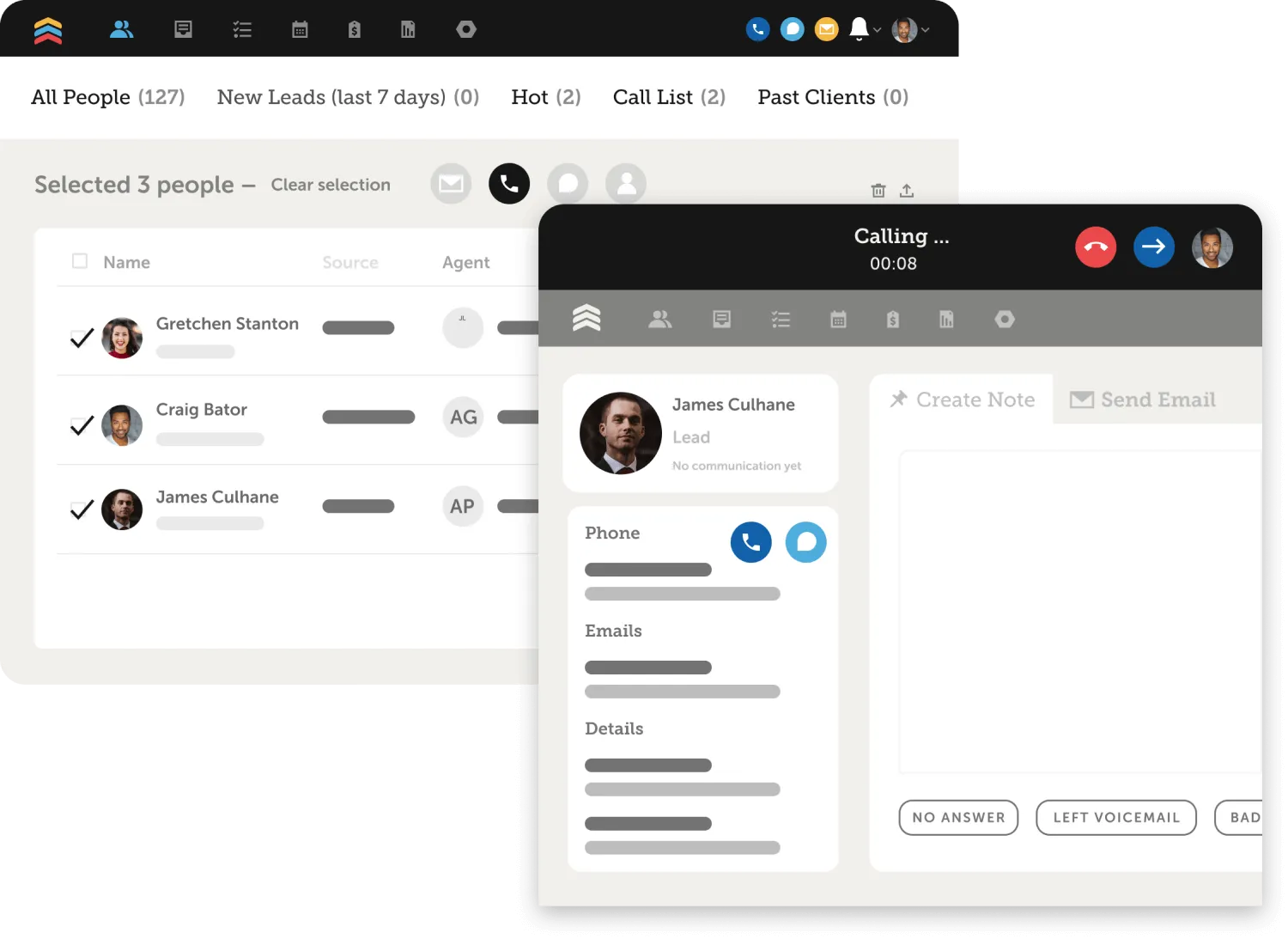
Make your data work harder in listing presentations. Follow Up Boss gives you instant access to buyer activity, conversation history, and market insights so you can reference every detail naturally when it matters most. See how top agents stay organized.
Prepare and send your pre-listing materials
In your initial conversation, let the seller know you'll be creating a detailed comparative market analysis (CMA) for their home.
Ask what could impact their home's value in either direction—recent updates, needed repairs, renovations. This information shapes your pricing strategy and shows you're paying attention to their specific property, not just pulling generic comps.
Choose your format and stick with it.
Digital presentations are convenient, but they lack impact. Hard-cover presentations still win listings because they signal investment and professionalism. Most top producers use both: a hard copy for the in-person meeting and a digital version for reference.
Skip the live web pages and video presentations unless you have clear evidence they close more deals for you. Most don't. Focus on quality content over format gimmicks.
Send a pre-listing packet 3-5 days before your appointment.
This accomplishes two things: it positions you as prepared and organized, and it reduces cancellations because sellers who've already reviewed your materials feel more invested in the meeting.
Include:
- Your background and recent sales results
- Market overview for their neighborhood
- Initial pricing insights (but save the full CMA for the in-person meeting)
- What to expect during your appointment
The digital-physical combo that works:
- Email the digital version 3-5 days out
- Bring the hard-copy presentation to your appointment
- Leave it with them after your meeting
If you have support staff or budget for it, having the hard copy hand-delivered a day or two before your meeting adds another professional touchpoint. But don't overthink it.
Showing up prepared matters more than delivery theatrics.
During your listing presentation
You've done the research. You know the numbers. Now it's time to demonstrate why you're the right real estate agent for this seller.
The one skill that matters most: listening.
Before you open your presentation or talk about your marketing plan, you need to understand what the seller actually cares about. Agents lose listings not because their marketing plan wasn't impressive enough, but because they were so focused on their pitch that they missed what the seller was actually saying.
Start by setting the tone through active listening. This isn't small talk—it's strategic. The more you understand about their timeline, their concerns, and their priorities, the better you can position your services as the solution to their specific situation.
Touring the home and making the close
Don't rush into the property walkthrough. Start in a comfortable setting—the living room, the kitchen table—and ask about their goals. Why are they selling? What's their ideal timeline? What concerns do they have about the process?
This accomplishes two things: it shows you're genuinely interested in solving their problem (not just winning a listing), and it gives you the information you need to customize your approach.
From there, you can go ahead and tour the property together. Many top agents recommend doing the upstairs first, then downstairs, and then a full 360 tour of the outside before sitting down to look at the CMA together, pricing strategy, and marketing plan.
It's not what you say, it's how you say it
The listing presentation isn't about memorizing every word of your script. It's about showing up confident, grounded in your data, and honest about what the market will actually do.
This means:
- Your posture and presence matter more than your PowerPoint. Stand (or sit) with confidence. Make eye contact. Use open body language.
- Your tone conveys trust. A calm, assured tone—especially when delivering difficult market news—builds more credibility than an enthusiastic pitch about an unrealistic price.
- Slow down. Anxious energy makes everyone nervous. Confident agents take their time.
Rachel Choo, Director of Sales at Whissel Realty, trains her agents on a critical insight about communication:
"There's been studies done about how people receive and perceive communication. We know that going in, we need to focus a lot more on our body language and our tonality. How are we standing? What environment are we talking about this in?"
When you're discussing pricing strategy or local market conditions, pay special attention to your tonality. You're not trying to convince them of something—you're their guide helping them understand market reality.
Have an honest conversation about the market
One of the biggest tests of your listing presentation is what happens when your CMA doesn't align with the seller's expectations.This is where many agents falter.
They either avoid the conversation entirely or cave to pressure and list at an unrealistic price.
The best agents know their numbers so well that they can have honest, data-driven conversations about pricing without flinching. Remember, you're building trust through evidence, not opinions.
When the seller's desired listing price is too high:
- Lead with empathy: "I understand you were hoping to list at $X. Let me show you what the market data is telling us."
- Present the evidence: Walk them through recent comparables, days on market for overpriced listings, and showing activity at different price points.
- Discuss consequences: Be direct about what happens when homes are overpriced—fewer showings, longer market time, eventual price reductions, and potentially netting less than if they'd priced correctly from the start.
- Give them options: "We can list at your price, but here's what I predict will happen based on these market trends. Or we can price it here and likely generate multiple offers in the first two weeks."
Your job isn't to tell sellers what they want to hear. It's to tell them what they need to know.
Homeowners who choose to work with you want an advisor, not a yes-person. When you're armed with data and deliver it with confidence, you're in a far better position to win more listings at the right price.
💡Give agents talking points, not scripts
Rachel's approach to difficult seller conversations focuses on preparation—not boilerplate objection handlers: "Scripting only works if the other person has the script and usually they don't. So giving people talking points—here are some ways to handle the objection without a traditional script—has worked really well for our team."
When preparing for pricing conversations, develop 2-3 different ways you could explain the same concept. Practice them until they feel natural. This way, when the seller responds unexpectedly, you're not thrown off—you have multiple paths to the same destination.
Here’s how she explains it:
“How I might say it in my personality might be different from somebody else. Give agents a couple options of ways to frame it, with talking points and bullet points. Some are more formalized and some are more of an idea. The key is making sure you're appealing to all different kinds of learning styles."
Securing the listing agreement
Once you've established pricing alignment, or at least a mutual understanding of the market, it's time to present your marketing plan and move toward closing.
This is where many agents either rush or hesitate. Don't do either.
You've earned this moment through expert preparation and honest conversation. Now demonstrate why you're worth working with.
{{cta-yellow}}
Walk through your marketing strategy with specificity
Don't just say "I'll market your home aggressively." Explain exactly what that means: professional photography and staging consultation, targeted digital advertising, email campaigns to your database, social media promotion, broker tours, open houses, and your follow-up process with showing agents.
The more specific you are, the more valuable your service appears.
Address commission structure directly
The agents who struggle here are the ones who cross their fingers and hope the seller doesn't bring it up.
Explain what you charge, why you charge it, and what the seller receives in return. If you've done everything else right—demonstrated expertise, had honest conversations, presented a compelling marketing plan—this conversation becomes much easier.
Ask for the listing agreement
After you've presented your plan and addressed their questions, make the ask directly:
"Based on everything we've discussed, I'd love to represent you in selling your home. Can we move forward with the listing agreement?"
The close isn't a trick or a tactic. It's the natural conclusion to a conversation where you've proven you're the right agent for this seller.
Camila Rivera, COO of the Laurie Finkelstein Reader Team, learned this lesson through conversion data:
"We weren't converting. That's the reality. We realized everyone wasn't focused and we didn't have different SOPs for the different lead sources. We just had two SOPs, one for buyers and sellers."
The solution? Tailored approaches for different seller situations.
"All of our seller opportunities require different levels of outreach based on where they come from. We have to make sure that we have an agent that is best at that conversation—a local expert, someone who has done a lot of transactions in that area."
🚨 Not all sellers need the same presentation
A seller responding to a postcard about their neighborhood needs a different conversation than someone inquiring about a cash offer or calling from a yard sign. Before your appointment, identify how this seller found you and what that tells you about their priorities.
Postcard responses? They want a local expert who knows their specific neighborhood inside and out. Cash offer inquiries? They're motivated by speed and convenience. Sign calls? They're actively shopping agents and comparing options.
Adjust your presentation accordingly. Lead with the aspects of your service that match what brought them to you in the first place.
After the listing presentation
Whether you won the listing or not, your job isn't finished.
If you secured the listing: Move immediately into next steps. Don't let the momentum die. Schedule your first check-in, discuss the listing timeline, and set clear expectations for communication. Add them to your seller workflow in your CRM so nothing falls through the cracks.
If you didn't win the listing: Thank them for their time and stay in touch. Many agents who initially chose someone else come back after that relationship doesn't work out—but only if you've stayed visible.
Add the seller to a dedicated follow up sequence that provides market updates and staging tips.
If you've already got a killer real estate newsletter, much of this content can be repurposed to be targeted directly toward sellers.
At the end of the day, you can't control whether a seller chooses you. But you can control how prepared you are, how honestly you communicate, and how confidently you present your value.
Master those three things, and you'll build a thriving real estate business by winning far more listings than you lose.
Your database is your competitive advantage. Follow Up Boss helps you track seller interactions, analyze your listing pipeline, and leverage your data to drive showings, open houses, and offers. See why top agents choose Follow Up Boss.
{{cta-blue}}
FAQs
How do I prove my track record to sellers who ask about my experience?
Come prepared with specific numbers and recent case studies. Rather than saying "I've sold over 50 homes," say "I've closed 47 listings in the past 12 months with an average of 98% of list price and 23 days on market."
If you're newer to real estate, lean on your team's track record, your training, and your commitment to the process. Sellers want confidence backed by evidence—whether that's your own results or the proven systems you're part of.
How important is social media marketing in a listing presentation?
Extremely important, but only if you can show specific results. Don't just say you'll post on social media—show examples of past listings, the reach those posts achieved, and the buyer inquiries they generated. Explain your social media marketing strategy: professional photos, targeted ads, video walkthroughs, Instagram stories, and Facebook campaigns.
Sellers want to know their home won't just be listed—it will be actively promoted to potential buyers where they're already spending time online.
What if the seller asks to see my buyer presentation or wants to know how I work with buyers?
This is actually a positive sign—they're thinking about the full transaction. Walk them through how you qualify buyers, your buyer consultation process, and how you protect their interests when working with buyer agents.
If you have a formal buyer presentation, briefly show them what buyers see when they work with you. This demonstrates you understand both sides of the transaction and reinforces why you're the right listing agent for their property.
.webp)
%2520(1)%2520(1).png)
%2520(1)%2520(1)%2520(1)%2520(1).png)
.png)