



.svg)


.svg)
.svg)
.svg)
.svg)
.png)

Your real estate CRM is so much more than a fancy address book. It's a treasure trove of insights that most agents barely tap into.
Every click, email open, and property search tells a story about what your prospects want and how they behave. But are you using that information to your advantage? Get ready to turn data into deals with 5 strategies for putting your CRM intel to work.
Why data is gold for real estate agents
You didn't get into real estate to become a data scientist, but in today's tech-driven world, the information in your CRM can certainly give you the upper hand.
Every day, your CRM has valuable intel about the real estate leads in your database. Which listings they're eyeing. When they open your emails. How they interact with your website.
This isn't just random information—it's the key to understanding exactly what your clients want and when they're ready to make a move.
When you put this data to work, you can:
- Stop wasting time on unqualified prospects and focus on clients ready to transact
- Transform new leads into warm relationships by knowing exactly when and how to reach out
- Create targeted marketing that speaks directly to what your contacts are looking for
- Prove your value to your past clients and SOI with personalized touchpoints
- Boost your efforts on the right real estate marketing channels
The best part is, many CRMs will do the heavy lifting for you. The right lead management platform will take all those valuable details and serve them up as easy-to-use insights that tell you exactly what to do next.
{{cta-white}}
5 ways to use your CRM data for better marketing and follow up
At its core, real estate will always be a relationship business. But mix your people skills with smart data, and you can nurture those connections without losing focus on the leads most likely to convert.
Here are 5 strategies to help turn your CRM data into dollars.
1. Track lead behavior to spot ready buyers
Start by understanding which touchpoints move the needle for your real estate business.
“Decide what’s most important to you—transaction size, when you connected with them, where you connected with them, how often you connect with them, how active they are, how engaged they are, how big their micro network is—there are just so many different avenues,” says Buck Wise, CEO of #CLOSINGDAY Agency.
These tips can help you narrow it down:
- Track prospect engagement through email opens, clicks, and responses to find your most interested leads
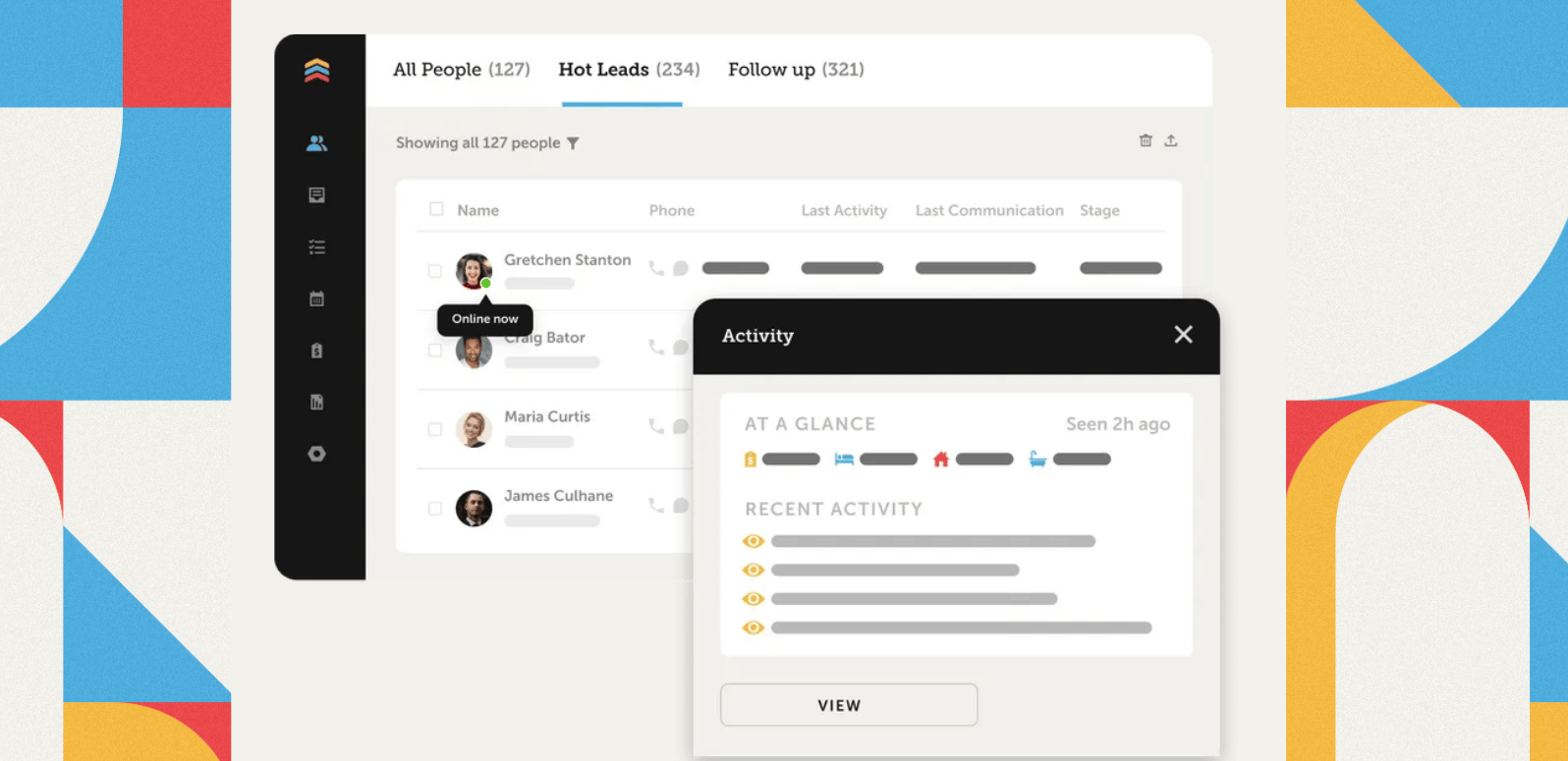
- Monitor website visits to target leads when they're actively searching for properties
- Review communication history to understand peak engagement times and keep track of important notes
- Track contacts based on filters like stage and last communication
The key is to look for patterns in successful deals that you can replicate with future leads. And according to Buck: “The way you do it is by understanding as you're closing these clients, that journey of where they came from, who they are, and how they made a decision. That helps you clone the strategy.”
2. Set up marketing automations that actually convert
For experts like Buck, once you know what you’re looking for, the next question is: “How do we automate the repetition?”
To turn data into dollars at every level of your business, you need repeatable systems free from human error. That’s where real estate automation comes in.
Try some of these powerful automations:
- Re-engage stale leads - Automatically tag and follow up with passive leads who start showing new activity.
- Hot lead follow-up - When a lead looks at multiple properties, trigger a new inquiry follow-up automation with automatic updates to keep you on their radar for a full week.
- Open house conversion - Turn sign-in sheets into clients with an open house follow up automation that immediately starts nurturing new contacts.
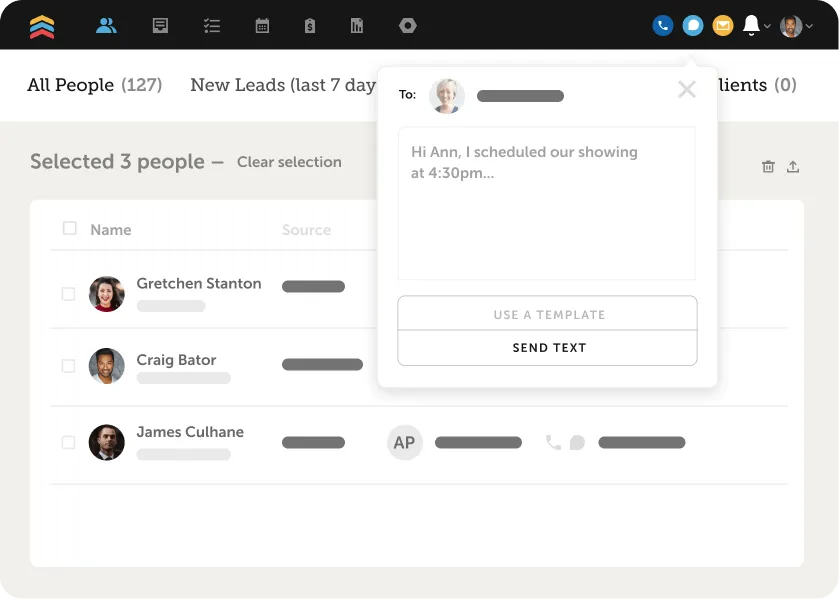
- Active lead alerts - Set real-time notifications anytime an unconverted lead returns to your site so that you know exactly when to call.
- Long-term buyer nurture - For leads with 3+ month timelines, keep them engaged using a long term nurture automation.
- Post-close nurture - Create a post closing follow up automation to turn past clients into repeat business.
No shade to automated birthday greetings—but they’re just the tip of the iceberg when it comes to real estate automation. Just make sure you keep each touchpoint relevant by using the intel in your CRM to personalize each text and email. With the right lead management platform, you can strike the perfect balance between relevant and consistent.
“Continued follow up has made the difference on all of our lead sources,“ says Lauren Bowen, COO at Robert Slack Real Estate. With 16 lead sources and nearly 800 agents, experts like Lauren rely on FUB’s Instant Action Plans to connect with hot leads at scale. “Calling them once is not going to cut it. Calling them twice is not going to cut it either—but a continued follow-up is going to.”
{{cta-blue}}
3. Boost social media lead generation
As with your follow-up, your social media strategy is only as good as your ability to work the leads that come in.
“Social media is a tool. You can use it as a tool or be used by it. It’s your choice,” says Shawn Getty of Getty Group. The team leader drives 30-40% of his business from Facebook at zero cost. He got there by having strong nurture and retargeting systems.
Supercharge your social media results with these strategies:
- Make sure you're connecting all those social media dots back to your contact records
- Keep tabs on where your leads are coming from—Facebook, Instagram, LinkedIn, etc.
- Connect your lead ads directly to your CRM
After connecting your accounts, simply activate the Facebook Lead Ads action plan to help convert your social leads through smart automations. The system will automatically send a personalized mix of texts and emails to each new lead, making it easy to start a conversation.
4. Create data-driven email marketing campaigns
"One of the things that we love to do is create your first original message for the masses and then segment that same message by just changing the first sentence,” says Albert Vasquez of AV Home Experts.
This approach has led to peak engagement on the team’s email marketing campaigns. Here’s an example of how they do it:
“For someone that's cold that's months out, I'm like 'hey Trenton, I know that you're quite a few months out and you're just looking for the right moment.' That first sentence reels them in to know it's tailored to them, while the rest of that email is generic."
Think of it like a template sandwich—keep the meaty middle of your email the same, but switch up that first bite for different audiences. Cold leads might get "Hey John, I know you're just starting to explore homes..." while hot leads get "Hey John, noticed you've been checking out properties lately!"
Here are some additional tips for using your CRM data to make your emails hit harder:
- Segment your contact lists based on engagement levels (hot, warm, cold)
- Monitor which opening lines get the best response rates for different segments
- Create targeted follow-up sequences based on how contacts engage with your emails
- Use your CRM's email analytics to identify the best times to send to each segment
Remember, your prospects don't need a completely unique message—they just need to know you understand where they are in their real estate journey. By letting your CRM data guide these small but meaningful personalizations, you can scale your email marketing without losing the personal touch.
5. Measure marketing ROI
Last but not least, use your CRM reporting to see which real estate scripts and automations get the best results, then double down on what works.
Here are some tips for using your CRM data to track which lead sources actually bring in deals:
- Know your conversion rates and true cost per lead
- Customize follow-up based on how leads find you (PPC, referrals, etc.)
- Monitor response times to keep leads hot
- Use and agent performance dashboard to spot team gaps
- Keep leads moving by reassigning stale leads to fresh agents
- Create marketing dashboards to get ROI insights at a glance
With the right data insights, you’ll be able to sharpen your ROI by making sure that both sides of the sales and marketing coin are fully optimized.
"Getting that data, having real information that we know is accurate and true, and then being able to use it and tell a story with it so that the sales team can really go in and do effective pipeline reviews with the agents on an individual basis or even in a group setting—without having the information, it's really hard to be able to coach people on the right things," says Shannon Youssefi, team operations leader at Whissel Realty Group.
Get more out of your real estate CRM
Your CRM data tells the story of every lead, client, and deal in your pipeline. But like any good story, it's not just about collecting information—it's about using those insights to create better outcomes.
Ready to see how the right CRM can transform your real estate business? Try Follow Up Boss free for 14 days and experience the difference. Sign up now and get instant access to Action Plans, smart lists, and real-time performance tracking.
Your next big deal could be hiding in your database. Let's help you find it.
{{cta-white}}

.webp)
%20(1)%20(1).png)
%20(1).png)